
Japan Travel in 2026: What's Changed and What You Actually Need to Know
New Tourist Pasmo, Mt. Fuji reservations, Kyoto hotel taxes, and more — a complete 2026 Japan travel logistics update from someone who has been navigating Japan for 22 years.
Here's the thing about Japan travel advice on the internet: most of it was written in 2018 and nobody updated it. The same tips recirculate endlessly — get a Suica card, take the shinkansen, bow a little. All still true. But 2026 has changed enough specific details that following old guidance will genuinely cost you money, limit your access, or leave you confused at an airport counter.
I've been living with, traveling to, and studying Japan for 22 years. This post is the practical briefing I give every client before we start planning — updated for what's actually different right now.
Let's go through it one change at a time.
01 — The Tourist Pasmo Is Here. Here's What That Means.
If you've been to Japan before and remember the Pasmo Passport — the tourist-specific IC card you could buy at the airport — that card was discontinued in 2024. A lot of travel guides still recommend it. It no longer exists.
The replacement is the Tourist Pasmo, launching in May 2026 at Narita and Haneda airports. It works on essentially every train, subway, and bus in Japan, and also at convenience stores, vending machines, and many shops and restaurants. It's valid for 28 days from purchase — which covers most trips cleanly — and is priced slightly cheaper than a standard Pasmo card.
However, the smartest option for most travelers in 2026 is actually skipping the physical card altogether. If your phone supports Apple Wallet or Google Wallet, you can add a Suica or Pasmo directly, top it up with a foreign credit card, and tap through every gate in Japan without touching a physical card. Setup takes five minutes on the plane. I recommend this to every client whose phone is compatible.
Bottom line: Check if your phone supports mobile IC. If yes, set up Suica or Pasmo via Apple/Google Wallet before you land. If not, pick up a Tourist Pasmo at the airport. Don't follow advice that recommends the Pasmo Passport — it's gone.
02 — Mt. Fuji Now Requires a Reservation. Full Stop.
This is the change that catches the most first-timers off guard. You can no longer simply show up at Mt. Fuji's fifth station and start climbing. Climbing season access now requires an online pre-reservation through Japan's digital gate system, which applies to all four main trails. Show up without one and you will not pass the gate.
The system was piloted on the Yoshida Trail in 2024 and fully expanded in 2025 after overtourism on the mountain reached a breaking point — midnight climbers, trail litter, people taking dangerous shortcuts for photos. Japan took it seriously and put real enforcement behind it.
Plan ahead: Peak season runs early July through early September. Weekend slots fill up two to three weeks in advance. If Fuji is on your list, book your reservation window before you finalize any other plans around it.
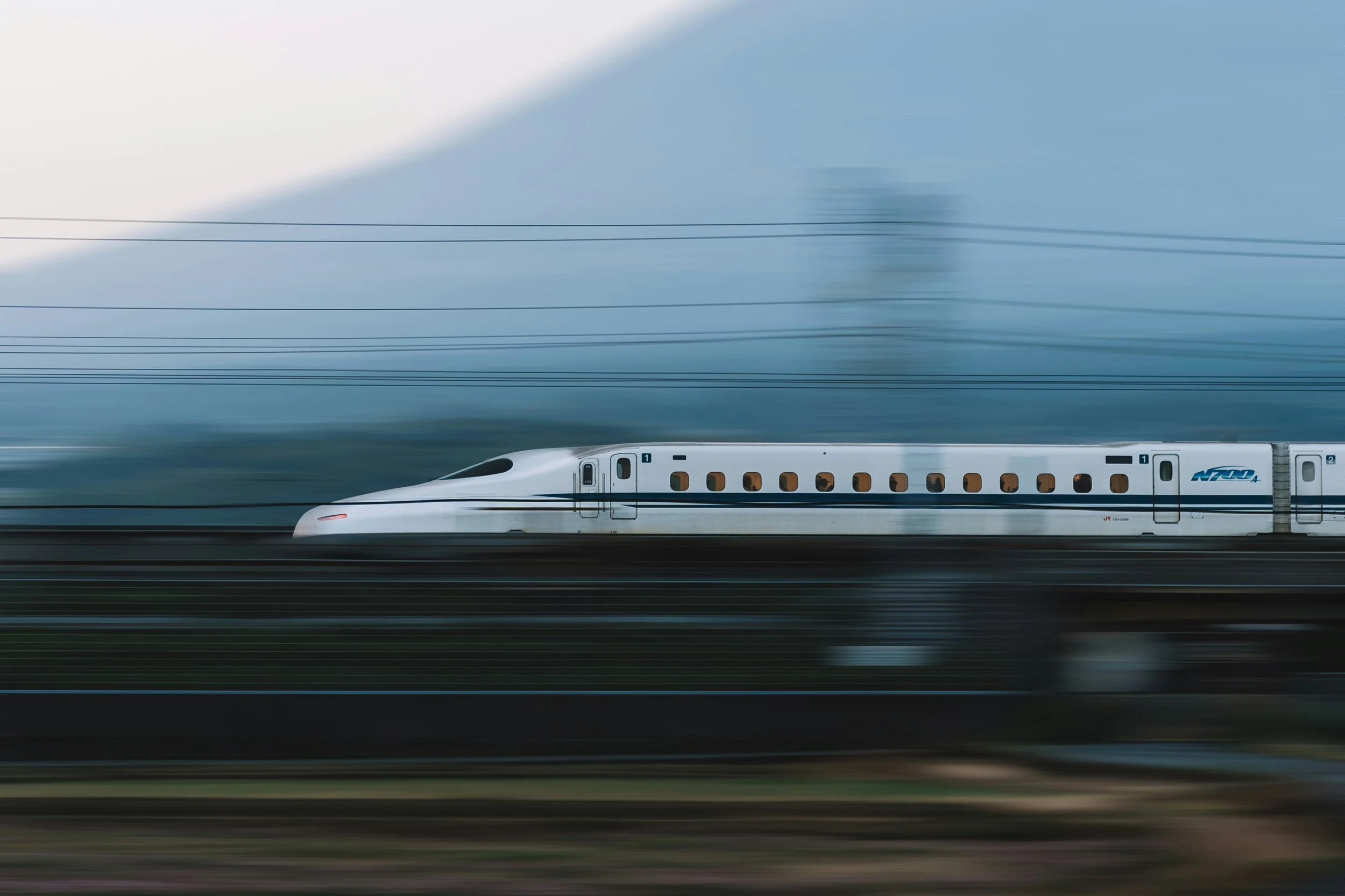
Honestly? For most of my clients, I gently suggest skipping the climb altogether and appreciating Fuji from a distance — from Hakone, from the Chureito Pagoda in Fujiyoshida, or from a Shinkansen window on a clear morning. The view from below, in many ways, is the better experience.
03 — Kyoto: New Hotel Taxes, Gion Rules, and Why This Actually Helps You.
Kyoto implemented a new five-tiered accommodation tax in March 2026, and it is significant if you're staying in mid-range or luxury properties. Budget stays under ¥6,000 per night pay a modest ¥200 per person. Mid-range accommodation runs ¥1,000–¥4,000 per person per night. Luxury stays — the kind of ryokan that Wander Wide clients often book — can now carry a tax of up to ¥10,000 per person per night.
This is real money on a week-long trip. Build it into your budget, especially for Kyoto nights.
On top of that: the Gion district's rules around photography in residential alleys are now actively enforced. Fines apply for entering the private lanes off Hanamikoji Street where geiko and maiko commute to work. The main street remains open. The side alleys, clearly marked, do not. This is not a suggestion — it's law, and enforcement is visible.
"The travelers who understand why these rules exist are the ones who experience Kyoto most fully. Respect for the place is part of how you earn access to it."
Here's the honest reframe: all of these changes are good news for travelers who plan thoughtfully. Kyoto is using this revenue to preserve UNESCO heritage sites, fund the Gion Festival, and manage the overtourism that has made the city exhausting for residents and visitors alike. Fewer careless tourists means more space for people who actually want to be there.
05 — Tax-Free Shopping: The In-Store Discount Is Ending.
If you've shopped in Japan before, you're familiar with the tax-free counter: show your passport, get 10% back on eligible purchases right at the register. That system is changing significantly on November 1, 2026.
Under the new model, you pay the full tax-inclusive price in store. Then, before you depart Japan, you register your purchases on the J-TaxRefund website (QR codes on receipts link directly to it) and claim your refund at the airport on the way out. The savings are identical — it's the process that moves.
A few practical notes: you still need your passport to be eligible. The minimum purchase threshold is ¥5,000 per shop per day. Items shipped home from stores no longer qualify (that exemption was closed in April 2025). And luxury goods, electronics, and watches now have additional tracking requirements to prevent resale abuse.
If you're traveling before November 1: The current in-store tax-free system still applies through October 31, 2026. Bring your passport to every shopping transaction — not a photo of it, the actual passport.
06 — The JR Pass: Another Price Increase Coming in October.
The Japan Rail Pass is going up again. From October 1, 2026, the seven-day adult pass in standard class rises by ¥3,000 to ¥53,000. The 14-day and 21-day passes are increasing proportionally.
My standard advice on the JR Pass hasn't changed: do the math before you buy. Add up the individual shinkansen fares for your specific itinerary and compare. For a Tokyo → Kyoto → Hiroshima → Osaka route, the pass often pays for itself easily. For a trip concentrated in one region, it may not. The price increases make this calculation more important, not less.
If you're planning travel in late 2026, consider whether you can purchase the pass before October 1 to lock in the current price — passes are typically purchased before arrival in Japan and can be bought up to three months in advance.
07 — What These Changes Actually Mean for How You Travel.
Taken together, these changes point in one clear direction: Japan is actively managing its own tourism, not just welcoming it. The country hit over 40 million international visitors in 2024 and is now using a combination of price signals, reservation systems, and enforceable rules to redistribute that volume more thoughtfully.
For travelers who plan carefully, respect local communities, and go looking for Japan beyond the Golden Route — this is excellent news. The places that have always been worth visiting quietly are getting even quieter as crowds concentrate at the famous spots. Kanazawa, Takayama, Tohoku, the Seto Inland Sea, Kyushu — all of these become more compelling, not less, as Kyoto and Tokyo tighten up.
This is, if you ask me, exactly how Japan should be traveled. Not as a checklist of famous places, but as a relationship with a country that is vast, layered, and endlessly generous to the people who take it seriously.
2026 Changes at a Glance
Tourist Pasmo — New tourist IC card replaces discontinued Pasmo Passport. Or use mobile Suica/Pasmo via Apple/Google Wallet. Now (May 2026)
Mt. Fuji — Online reservation required on all four trails. Daily caps enforced. Book 2–3 weeks ahead for peak season weekends. In Effect
Kyoto Hotel Tax — Five-tier system. Up to ¥10,000/person/night for luxury stays. ¥200 for budget. Since March 2026
Gion Photography — Fines for entering restricted alleys in Gion. Main street open; side lanes are not. Enforced Now
Departure Tax — Rises from ¥1,000 to ¥3,000 per person. Built into airfare automatically. July 1, 2026
Tax-Free Shopping — Moves from in-store discount to airport refund system. November 1, 2026
JR Pass Price — 7-day standard pass rises to ¥53,000. Consider buying before October. October 1, 2026
22 Years of Traveling to, Living in, Studying, and Breathing Japan — And I'm Still Discovering It
The first time Japan entered my life, I thought it might be a passing fascination.
That was 22 years ago.
Since then, Japan hasn't been a place I visit — it's been a place I've lived in, studied, returned to, and grown alongside. It has shaped how I think about travel, hospitality, beauty, and slowness. And somewhere along the way, it became the foundation of everything I do professionally.
I run Wander Wide, a boutique Japan travel company. My clients come to me when they're ready to stop looking at photos and finally get on a plane. And the thing I tell every single one of them, before we talk about itineraries or hotels or flight routes, is this: Japan is not a country you visit once and understand. It reveals itself slowly, deliberately, on its own schedule. And if you let it, it will become the thing you keep coming back to.
I know because that's exactly what happened to me.
"Japan is not a destination you 'do.' It's a relationship you build. And the longer you're in it, the more it gives you."
How Japan Became My North Star
My relationship with Japan didn't begin with a vacation. It began with curiosity — about the language, the culture, the philosophy underneath the aesthetics. That curiosity pulled me in deep. I studied. I lived there. I returned again and again, each time with a different lens: student, traveler, teacher, observer.
What I found — and what I keep finding — is a place that has no bottom. Japan is endlessly layered. Just when you think you understand something about it, you discover an entirely new dimension underneath. The longer you spend with it, the more generous it becomes.
I remember standing in a small garden tucked behind a temple gate in a neighborhood I wandered into by accident — no map, no plan, just following a quiet alley because it looked interesting. The garden was immaculate. A gardener was raking patterns into gravel I would have walked right past without noticing. Nobody was rushing. Nobody was performing. It was just a beautiful, ordinary Tuesday in Japan, and it was the most present I had felt in years.
That moment is still with me.
What 22 Years Taught Me
Early on, I experienced Japan the way most travelers do — moving through famous places, eating at recommended restaurants, taking the expected photos. And it was wonderful. Japan rewards even the most surface-level visit with beauty, efficiency, and a warmth that catches you off guard.
But the longer you stay — and the more you return — something shifts. You stop trying to see everything and start going deeper. You find the neighborhood izakaya where nobody speaks English and it doesn't matter. You discover that the best ryokan isn't the most expensive one — it's the one run by a family who has been doing this for four generations. You learn that the morning market in a small fishing town will be one of the best hours of your life if you just show up at the right time and don't rush.
You stop being a tourist. You start building your own Japan.
"The travelers who come back are the ones who went beyond the famous places — not because the famous places aren't worth seeing, but because Japan keeps offering you something deeper if you're willing to look."
Why I Started Wander Wide
For years, I helped friends plan their Japan trips. Then friends of friends. Then strangers who found me online. What I noticed, again and again, was that people were intimidated by Japan in a way that kept them from going — and once they finally went, they came back transformed and already wondering when they could return.
That gap — between "Japan is on my list" and "I'm actually going to Japan" — is exactly where Wander Wide lives.
I built a small-group travel company (we cap every journey at 10 travelers, because some places deserve to be experienced quietly) focused entirely on Japan. Not generic Japan. Not the greatest-hits package tour. Japan the way I actually travel it: with intention, with expertise, with enough space built in to let the unexpected moments happen.
Our journeys range from cycling the Shimanami Kaido island chain to sleeping in a Buddhist temple on Mount Koya to eating our way through the regional food cultures of Japan's lesser-known prefectures. Every itinerary is built around the question: what does this group of people actually need from this trip?
What Makes Japan Different
I've thought a lot about why Japan keeps pulling people back. Part of it is practical: Japan is extraordinarily safe, efficient, and well-organized in ways that make travel genuinely easy once you know the basics. Part of it is aesthetic: the country is simply beautiful, in a way that feels intentional rather than accidental — from the way a bowl of ramen is presented to the way a garden is designed to guide your eye through a landscape like a sentence.
But the biggest part, I think, is omotenashi — the Japanese philosophy of wholehearted hospitality. Not customer service. Not politeness. Something deeper: the practice of anticipating what a guest needs before they know they need it, and attending to it without fanfare or expectation of acknowledgment. You feel it everywhere in Japan, once you know to look for it. And once you've felt it, it resets your expectations for every hotel, every restaurant, every experience you have anywhere else in the world.
If Japan Has Been on Your List…
Let's get it off your list.
I'm not here to sell you a package. I'm here to help you build the Japan trip that's right for you — whether that's your first visit or your fifth, whether you want the full traditional immersion or a challenging cycling route through islands most travelers have never heard of.
Wander Wide is small by design. We take 10 travelers at most, because Japan's best experiences happen in quiet places, and quiet places don't scale. If that sounds like the way you want to travel, I'd love to hear from you.
Twenty-two years in, Japan still surprises me. I think it always will.
— Heather, Founder, Wander Wide LLC